Kiwoom flags inflation risks ahead of October CPI release without annual readings
iM Securities expected cheaper oil to ease U.S. inflation pressure after the midterms. Kiwoom flagged inflation risks, although official October headline and core CPI annual changes will be unavailable. October CPI is scheduled for Nov. 10 and PPI for Nov. 13.
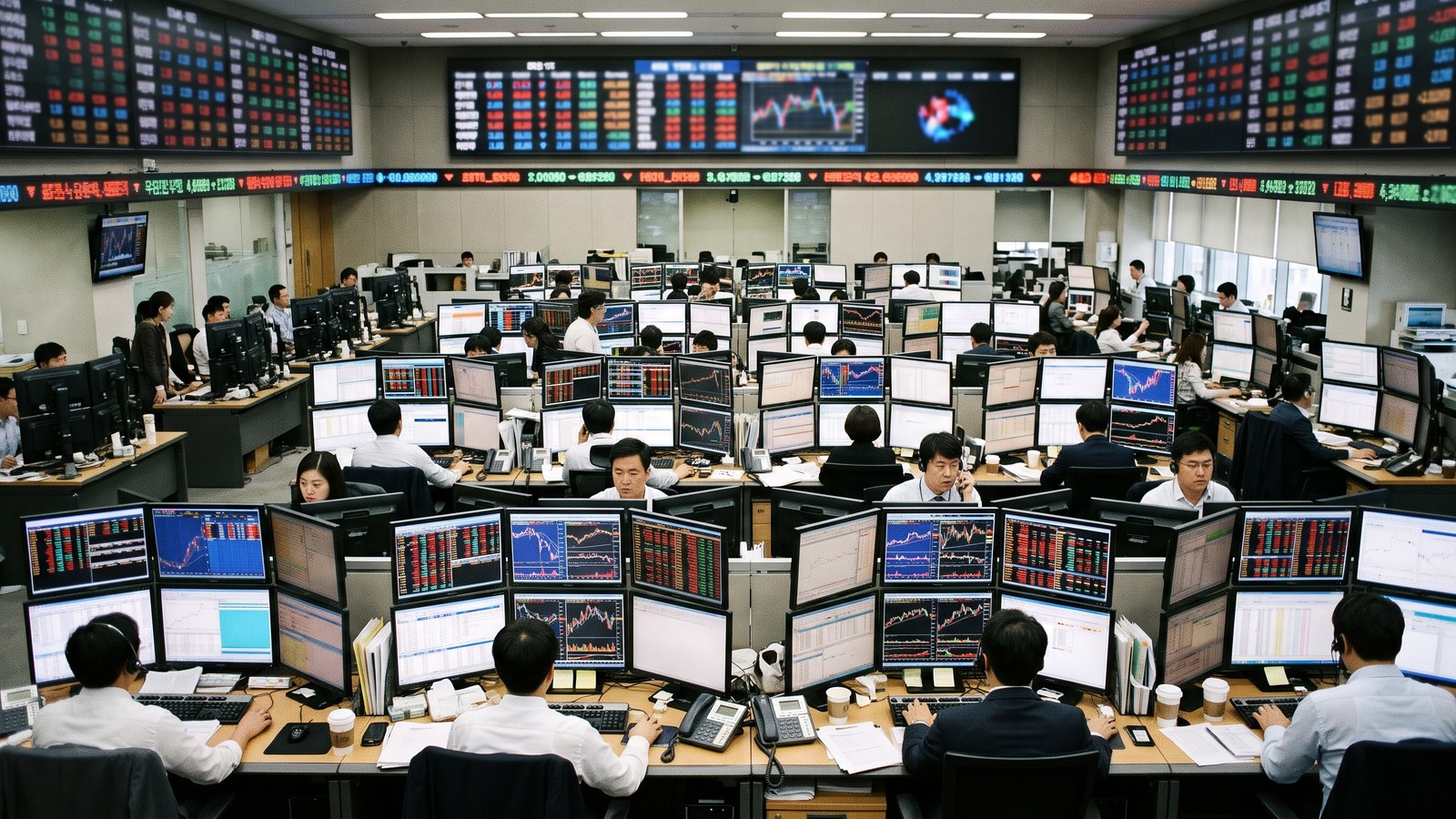
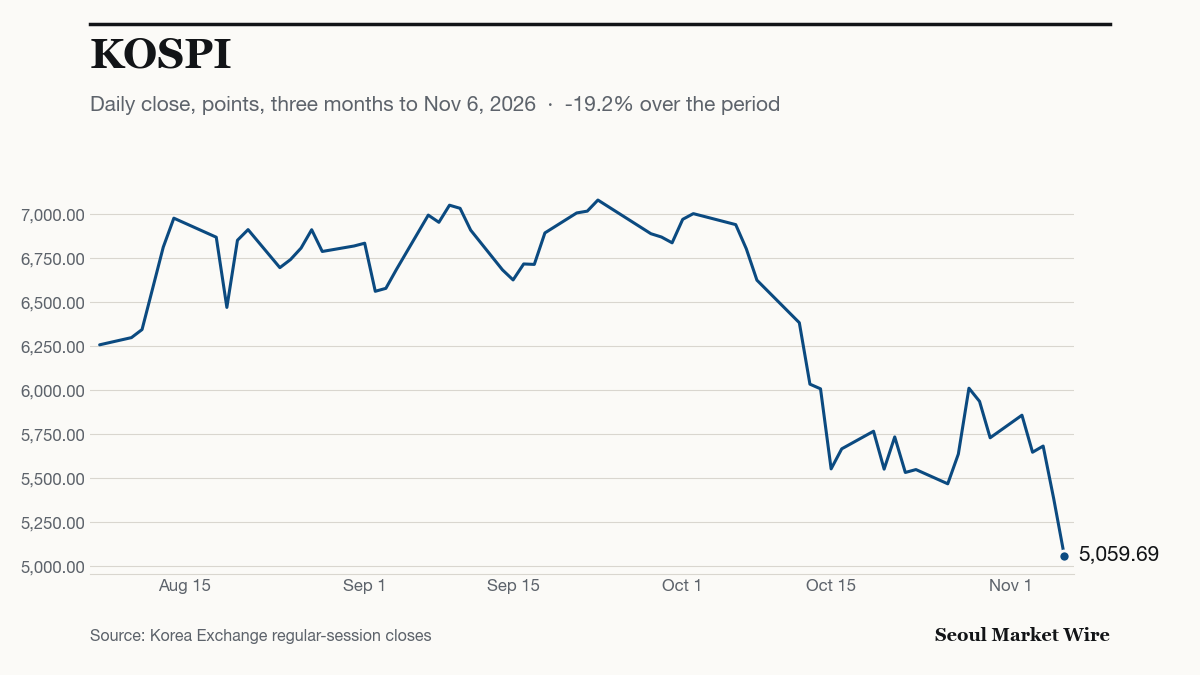
Market data: Korea Exchange regular-session close & Hana Bank USD/KRW reference rate, 2026-11-06 (KST)
Cheaper oil could ease U.S. inflation pressure and bring the Federal Reserve’s tightening cycle closer to an end, iM Securities argued in its Nov. 5 analysis. But that scenario depends on a further oil-price decline, while official October headline and core CPI annual changes will be unavailable.
Kiwoom Securities separately warned that base effects could lift annual inflation. Its Nov. 6 weekly macro report left the corresponding CPI consensus entries blank, making the distinction between its qualitative warning and the available official readings important.
What can the inflation releases show?
The brokerage expected slower monthly gains in consumer and producer prices but potentially faster annual increases because of base effects. Its economists argued that inflation would keep the Fed cautious even if market turmoil prompted softer commentary.
Kiwoom warned of faster annual inflation in its commentary, but its calendar left the consensus entries for October headline and core CPI annual changes blank. The report did not explain how its CPI warning should be assessed without those official readings.
BLS says it will omit October 2026 annual changes for indexes without October 2025 observations. The agency did not publish headline or core CPI indexes for that month after the government shutdown disrupted collection. That publication gap does not itself disprove an inflation risk.
October’s month-on-month CPI changes can still be calculated from September and October 2026 indexes. The comparison-month gap does not extend to PPI: BLS published the delayed October 2025 producer-price data with its November release on Jan. 14, 2026.
October CPI is scheduled for Nov. 10 and PPI for Nov. 13, both at 8:30 a.m. Eastern Time, or 10:30 p.m. KST, according to the BLS release calendar.
Despite allowing for less restrictive Fed commentary, Kiwoom maintained its forecast for another December rate increase. That is a brokerage forecast, not an announced Fed decision.
Did lower yields sustain the stock rally?
The initial reaction did not last. The S&P 500 rose 1.58% to 7,688.62 on Nov. 4, a move described in IBK Investment & Securities’ Nov. 5 report as a response to reduced political uncertainty after the election.
By Nov. 5, the index had fallen 4.36% to 7,353.73. Kiwoom’s morning letter, dated Nov. 6, recorded NYMEX front-month WTI crude futures rebounding 2.72% to $90.52 a barrel even as Treasury yields declined. Its commentary attributed the stock sell-off to concerns about data-center regulation and AI investment returns.
The same report listed the U.S. two-year yield at 4.462%, down 11.9 basis points, and the 10-year yield at 4.837%, down 5.1 basis points.
For iM’s scenario to hold, oil would need to fall further. Its analysts saw room for WTI to reach the $70s if Iran-related risks eased; under that scenario, they expected the tightening cycle to end after a December increase.
What happened in Korea?
For Nov. 5, Kiwoom’s commentary reported a Seoul dollar/won close of 1,342.10, up 0.60 won. Its currency table separately listed 1,357.05, up 15.84 won. The report does not specify the currency table’s observation time or explain the difference.
The KOSPI closed down 6.02% at 5,059.69 on Nov. 6. Foreign investors sold a net 2.69 trillion won of KOSPI shares, according to Chosun Ilbo. The equity-flow figures do not show how much of the sale proceeds was converted into dollars.
What could support a rebound?
Softer inflation was one possible catalyst identified by Daishin Securities in its Nov. 6 report. The brokerage linked that scenario to steadier rates and a rebound in growth stocks that had suffered steep declines.
Its separate AI scenario depended on investment plans and access to financing. Maintained spending plans and funding capacity could help semiconductor sentiment, while renewed borrowing concerns or spending cuts could add pressure.
Daishin identified CoreWeave’s upcoming third-quarter earnings release as a test of those risks, focusing on cash flow, interest costs and financing plans.
Sources
- Kiwoom Securities — Weekly Macro: AI investment expectations reset; focus on inflation and the Fed (Nov. 6) stock.naver.com
- Kiwoom Securities — Kiwoom Morning Letter (Nov. 6) stock.naver.com
- iM Securities — Why U.S. financial markets cheered the blue wave (Nov. 5) stock.naver.com
- IBK Investment & Securities — Global Markets Monitor: the blue wave an angry Trump built (Nov. 5) stock.naver.com
- Daishin Securities — Next week's market: what could turn a market swept by the blue wave? (Nov. 6) stock.naver.com
5 more sources
- BLS — 2025 federal government shutdown impact on the Consumer Price Index bls.gov
- BLS — Revised news release dates following lapses in appropriations bls.gov
- BLS — November 2026 release schedule bls.gov
- BLS — Producer Price Indexes, November 2025 (Jan. 14, 2026) bls.gov
- Chosun Ilbo — KOSPI plunges below 5,000 in AI sell-off shock (Nov. 7) chosun.com