Korean equity selling complicates the case for won relief
The reports describe an initial US rally, subsequent Korean equity losses and uncertainty over data-centre costs. Kiwoom linked share sales to dollar buying, but net selling alone does not measure currency demand.
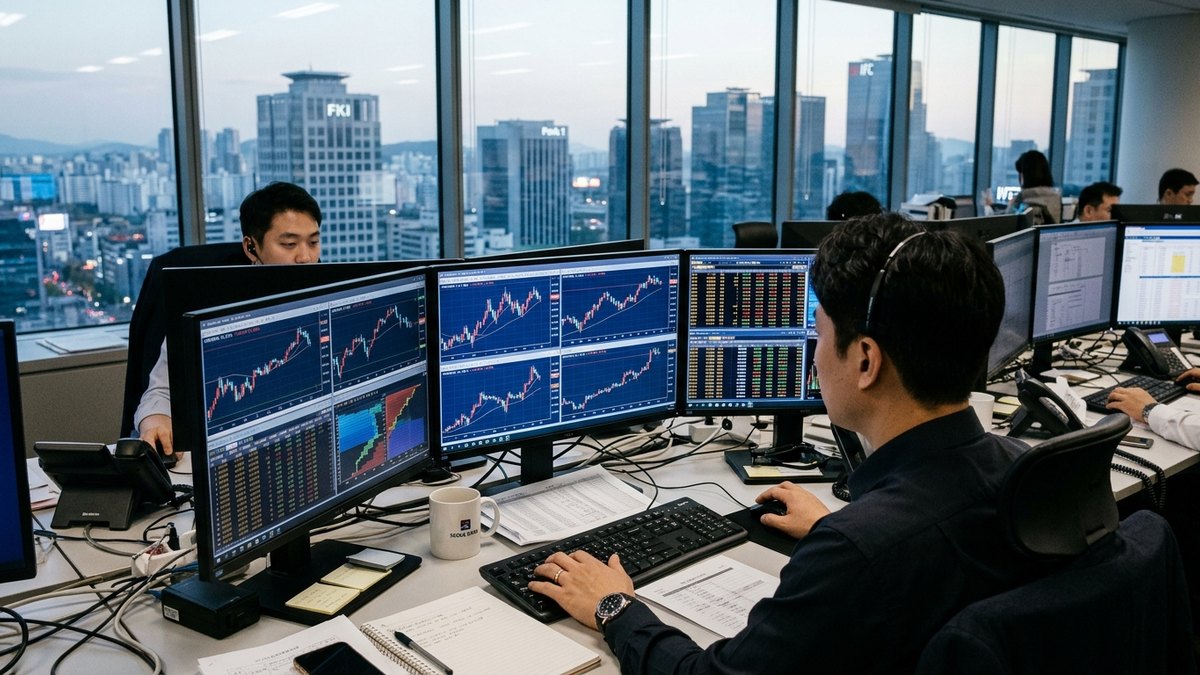
Market data: Korea Exchange regular-session close & Hana Bank USD/KRW reference rate, 2026-11-06 (KST)
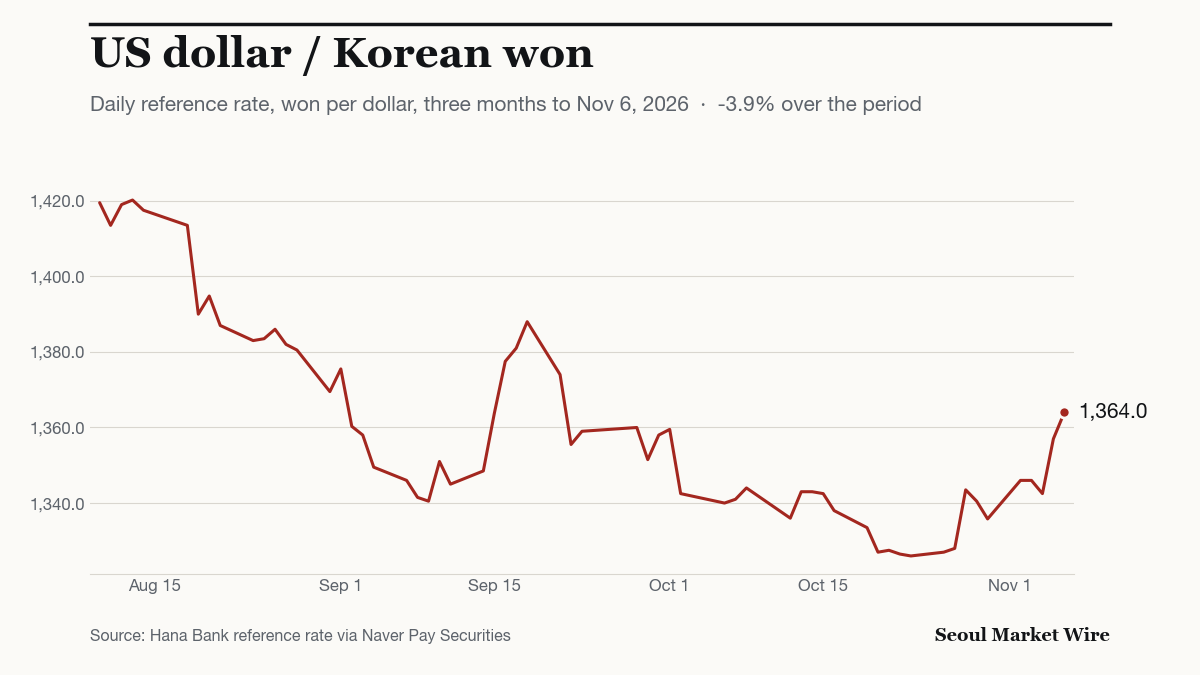
iM Securities’ Nov. 5 report linked the initial US market rally to lower oil prices and bond yields. The oil-price decline had already partly reversed by Nov. 5, according to Kiwoom Securities’ Nov. 6 Morning Letter.
But Korean and Taiwanese shares fell despite the initial US rally. Yuanta Securities’ Nov. 6 AI-cycle report attributed their weakness to concerns about AI infrastructure investment and reductions in foreign equity positions. The brokerage nevertheless judged the sell-off excessive, finding insufficient evidence that existing supply contracts or memory earnings had been damaged.
Korean shares fell after the initial US rally
The initial US gains reflected expectations of improved cash flow at large cloud companies, reduced political uncertainty and hopes of an end to the Iran war, in iM’s assessment. Its analysts also considered fears of a sharp fall in AI capital spending excessive.
Slower spending could leave the companies funding data-centre expansion with more cash. For suppliers, the relevant question was whether construction delays would change equipment orders. Yuanta distinguished delays in completing data centres from cancellations of server and memory orders; it did not treat projects exposed to regulatory risk as confirmed investment cancellations.
On Nov. 5, foreign selling and AI-related weakness dominated Korean trading, according to the Morning Letter. It described a fifth consecutive session of foreign net selling, with purchases by individuals and institutions insufficient to prevent the decline. Samsung Electronics and SK hynix fell as data-centre regulation concerns spread through the AI supply chain.
By the Nov. 6 regular-session close, the KOSPI had fallen a further 6.02% to 5,059.69. The KOSDAQ dropped 5.03% to 644.27.
What share sales reveal about currency demand
The Morning Letter’s table recorded foreign net selling of 3.4039 trillion won in KOSPI shares on Nov. 5.
Kiwoom linked custody-related dollar buying to foreign share sales, while noting offsetting dollar sales by exporters. That account identifies competing currency flows, rather than attributing the won’s movement solely to equity selling.
The net-selling figure does not identify how much investors converted into dollars or remitted abroad. It therefore cannot quantify exchange-rate pressure.
Slower expansion and unresolved costs
For AI infrastructure, Kiwoom’s Nov. 6 Weekly Macro assessment distinguished delayed expansion from widespread construction stoppages. Its analysts considered a broad halt unlikely because data-centre projects generate local investment, employment and tax revenue.
They treated the adjustment as a moderation in construction and investment growth rather than an end to the AI investment cycle. Unresolved policy coordination could nevertheless continue to burden financial markets, in their assessment. Yuanta likewise identified actual changes in construction starts and equipment orders as evidence needed to assess the effect of regulation and financing costs.
The report identified who would bear higher electricity bills and environmental costs as a key issue for regulation and permits.
Sources
- Yuanta Securities — Four questions for the AI cycle after the midterm elections, Nov. 6, 2026 stock.naver.com
- iM Securities — Why US financial markets welcomed the blue wave, Nov. 5, 2026 stock.naver.com
- Kiwoom Securities — Kiwoom Morning Letter, Nov. 6, 2026 stock.naver.com
- Kiwoom Securities — Weekly Macro: AI investment expectations adjust; focus on inflation and the Fed, Nov. 6, 2026 stock.naver.com