KOSPI tumbles 6.0% to 5,059.69 as foreign net selling hits 2.77 trillion won ($2.05 billion)
The KOSPI and KOSDAQ extended their losses, with Samsung Electronics down 6.35%. Foreign investors were net sellers on both boards.
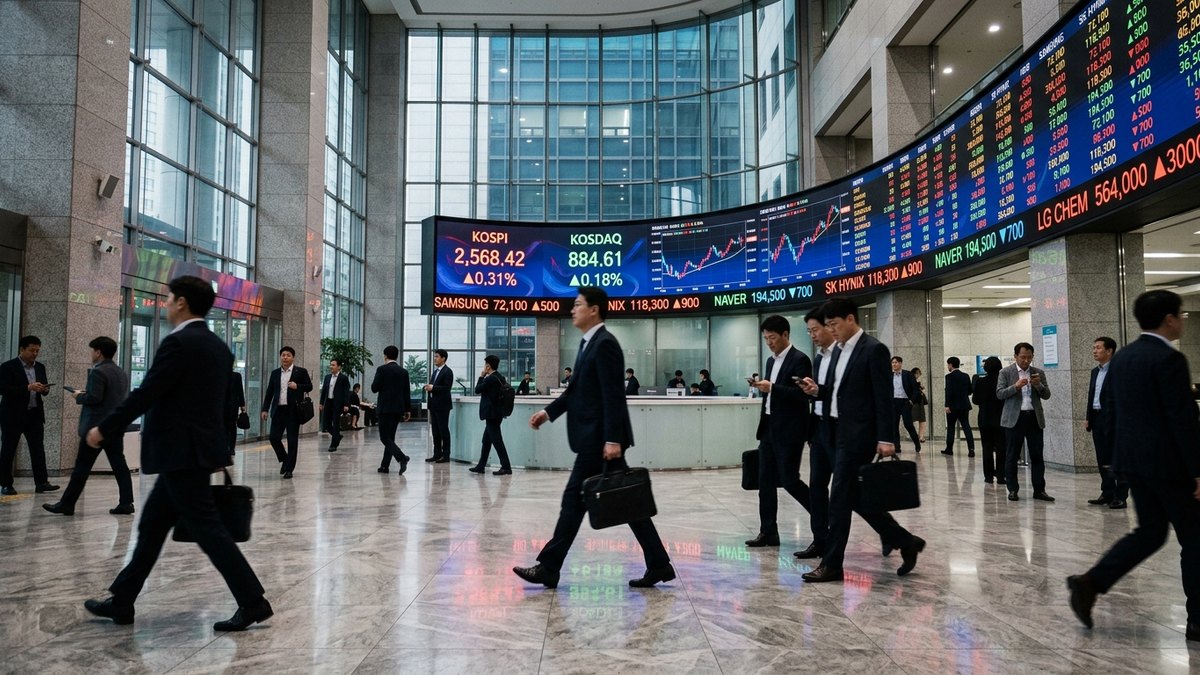
Market data: Korea Exchange regular-session close & Hana Bank USD/KRW reference rate, 2026-11-06 (KST)
The KOSPI fell 6.02% to close at 5,059.69 on Nov. 6, 2026, as foreign investors sold a net 2.77 trillion won of main-board shares. The KOSDAQ lost 5.03% to 644.27.
The Hana Bank reference rate carried by Naver stood at 1,356.4 won per dollar as of the Korean market close, compared with 1,357.0 the previous session.
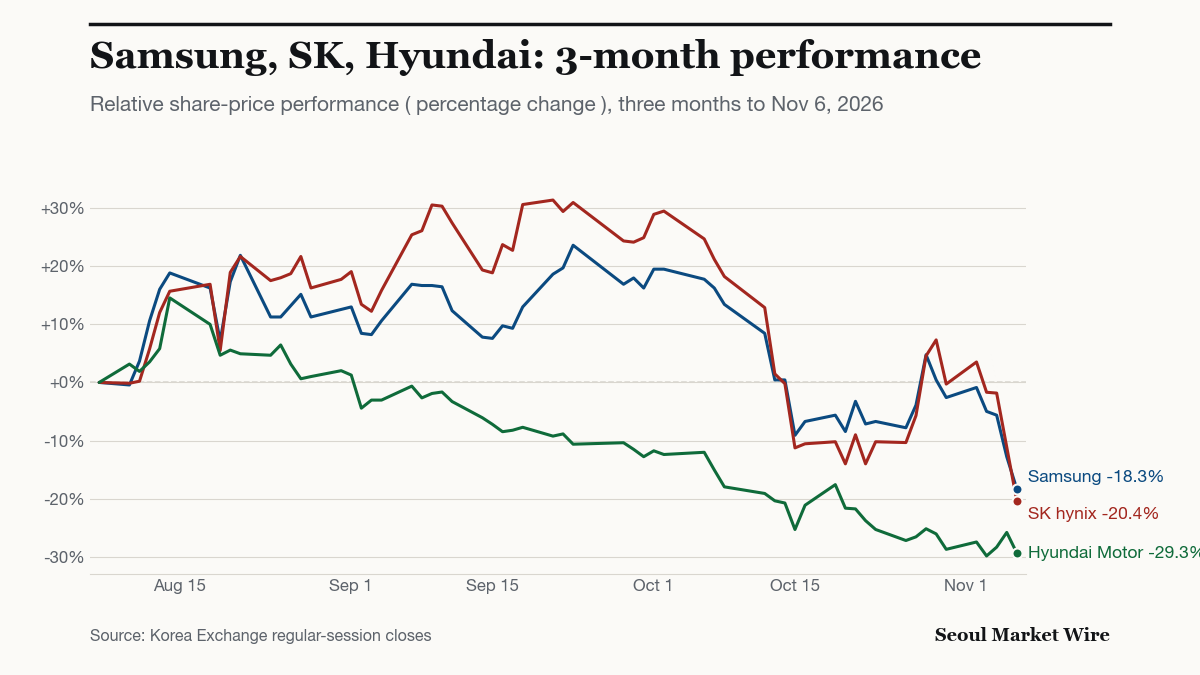
Samsung Electronics fell 6.35% to 188,700 won at the regular-session close. Hyundai Motor declined 4.77% to 279,500 won.
Friday’s decline followed the KOSPI’s 5.28% loss on Nov. 5.
Who bought against foreign selling?
Institutions bought a net 1.70 trillion won of KOSPI shares, against foreign net selling of about 2.77 trillion won. On the KOSDAQ, foreigners sold a net 100 billion won, while institutions bought about 206 billion won.
These are provisional Nov. 6 flow figures carried by Naver Pay Securities.
What data-centre regulation could change
In its Nov. 6 report, Kiwoom Securities attributed the Nov. 5 sell-off in US AI and semiconductor shares to concerns about data-centre regulation and slower AI investment. Its analysts cautioned that the scope of restrictions, actual project delays and a decline in AI demand had not been confirmed.
On federal policy, SK Securities’ Nov. 5 report said Republicans would retain their congressional majorities until the new Congress took office in January 2027. The brokerage argued that incoming Democratic majorities would still face President Donald Trump’s veto power.
At state level, the analysts identified possible restrictions on new data centres and requirements for operators to bear more electricity-grid costs. A change of governor would not automatically halt construction, according to the report. Local governments and utility regulators share authority over permits and electricity rates.
Reduced tax benefits and grid-expansion charges could raise initial investment costs, the brokerage argued. Contracts requiring minimum electricity payments could leave operators with fixed costs even at low utilisation. The analysis described potential project risks, rather than measures established by the election result itself.
Where else did shares fall?
KB Financial Group fell 3.82% to 151,000 won, and HD Hyundai Heavy Industries declined 3.14% to 262,500 won. Samsung Biologics slipped 0.26% to 1,516,000 won.
Sources
- Naver — Hana Bank USD/KRW reference rate finance.naver.com
- Kiwoom Securities — AI Panic Selling Driven by Fears of a Shrinking Investment Cycle (Han Ji-young, Yoo Ji-yoon); Nov. 6, 2026, pp. 1, 3 stock.naver.com
- SK Securities — Macro Comment: The Era of the Veto — Policy Speed and Investment Costs (Shin Yoon-jung); Nov. 5, 2026, p. 1 stock.naver.com